
The Room He Was Cooking For
Before Chef Alex imagined the dishes, he imagined the room alive.
Not the room as architecture. Not the room empty, photographed, admired, and left untouched.
He saw it filled.
He saw glasses catching the light. Plates moving between people. A table leaning inward over something shared. A guest pausing after the first bite because the food had somehow met the expectation created by the room itself.
That was the challenge he recognized when he arrived.
The building already possessed beauty, history, and presence. It spoke before anyone in the kitchen did. Alex understood that the food could not merely be served inside it.
The food had to belong to it.
He wanted the experience to feel whole.
The Vision Beneath the Menu
That instinct reveals more about him than a list of influences ever could.
Alex can speak the languages of Asian fusion, Mediterranean cooking, French technique, and Italian tradition. He began cooking at 17 and learned inside restaurants rather than through a formal culinary-school path.
His education came through repetition, observation, pressure, and the gradual understanding that every step matters.
But technique alone was never the destination.
He was looking for a way to make food carry atmosphere.
He wanted a dish to feel as though it had emerged from the room around it. He wanted the menu to respect the character of the building without becoming trapped in the past.
He saw modernization not as erasure, but as awakening: preserve the soul of the place, then give it motion.
That is the vision beneath the menu.
It is why Alex did not arrive and immediately force an identity onto the kitchen. He watched first.
He learned what the operation could carry, what guests returned to, what the staff could execute with confidence, and what the room seemed to ask for.
Then he began to build.
One menu became another. Dishes appeared, changed, disappeared, or earned their way forward.
Over roughly four or five versions, the restaurant began to reveal itself to him. The current menu became less a single invention than a record of discovery: the strongest ideas retained, the weaker ones released, and the entire experience sharpened through use.
Alex is not chasing novelty for its own sake.
He is chasing recognition.
That moment when a guest sees a plate and understands, before tasting it, that it could only have come from this room, through this kitchen, from these people.
A Chain of Attention
The staff is inseparable from that vision.
A restaurant is often described through the name of its chef, but the dining room never meets one person alone.
It meets a chain of attention.
It meets the cook who repeats a difficult preparation until it looks effortless.
It meets the person checking the plate before it leaves the pass.
It meets the server who reads the table well enough to know whether to explain the dish or simply place it down and let the moment happen.
It meets the host who changes the temperature of the evening with a welcome.
It meets the bartender who understands that the first drink is not separate from dinner.
It is the opening sentence.
It meets the dishwasher whose invisible work makes the next course possible.
Alex’s vision depends on all of them.
He does not imagine food as a collection of isolated performances. He imagines movement: kitchen to dining room, plate to table, person to person.
The restaurant succeeds only when every hand carries the same intention forward.
That intention is generosity.
The Table Becomes Part of the Composition
It appears most clearly in his decision to introduce a more shareable style of dining.
The idea was practical, but it was also deeply human.
Different people could arrive with different appetites and still participate in one experience. An entrée could reflect an individual personality. The shared dishes could bring those personalities back together.
The table became part of the composition.
A plate placed in the center asks something different of people.
It makes them reach. Pass. Offer. Recommend.
It interrupts isolation. It turns eating into a small act of collaboration.
Alex understood that the food was not only there to impress the guest.
It was there to connect the guests to one another.
Why Even the Fries Matter
He describes them as highly technical, which is almost funny until one understands what he means.
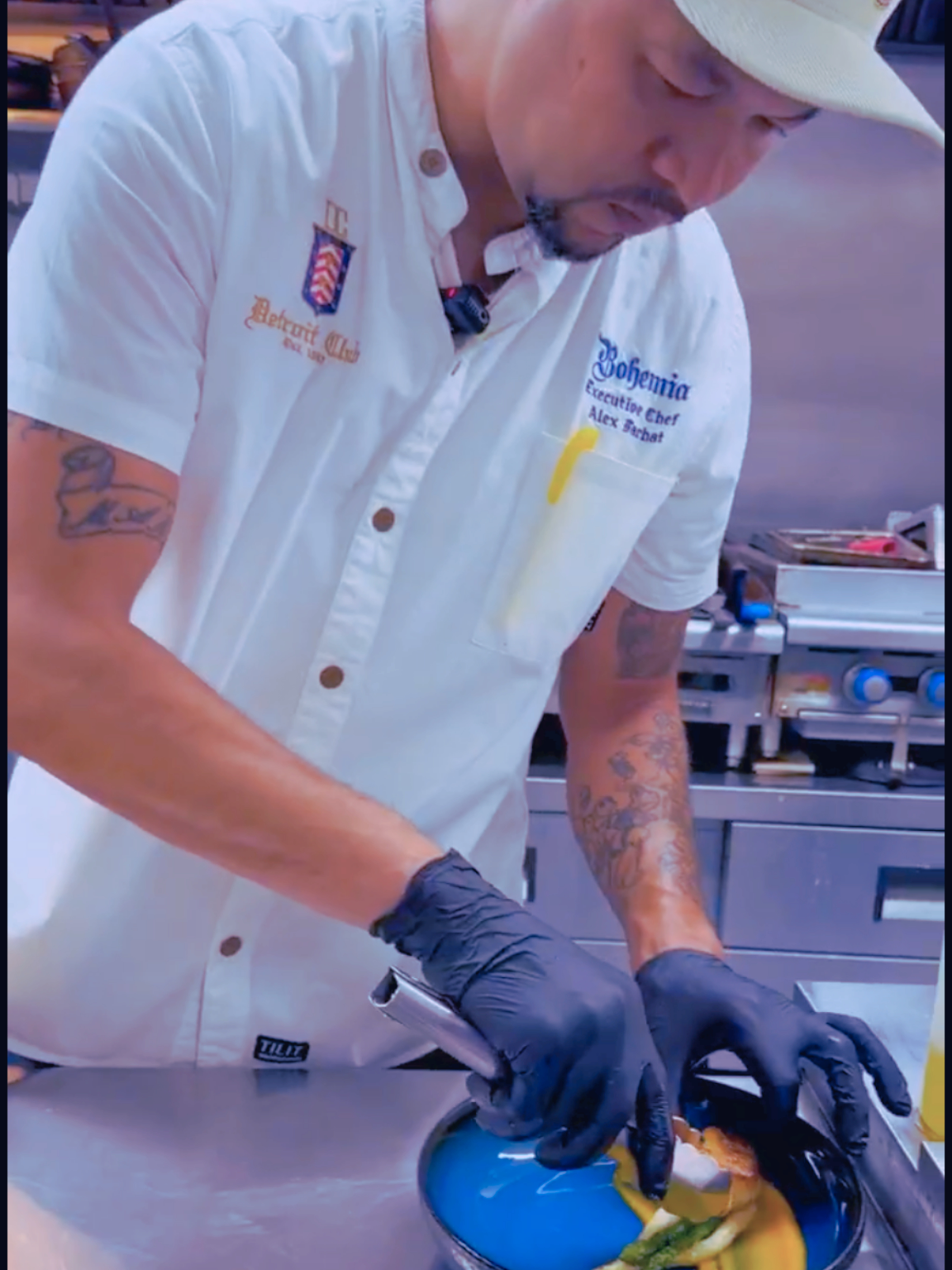
He takes an item people think they already know and refuses to treat it casually. The process is considered. The details are deliberate. The familiar is pushed until it becomes distinctive.
That is Alex in miniature.
He believes simple things deserve serious attention.
He does not need every plate to announce its ambition. Sometimes the ambition is hidden inside the method.
It is in the refusal to use the easy version.
It is in the difference between something merely served and something fully made.
Guests may never know every step behind it.
They only know the fries are unusually good.
The Work Behind the Ease
That gap between what the staff does and what the guest feels is where hospitality lives.
The labor disappears into the experience.
A kitchen may spend hours testing, prepping, correcting, and repeating. A service team may coordinate dozens of decisions across a single table.
But the guest should not experience the machinery.
The guest should experience ease.
The work is difficult so the evening does not feel difficult.
Alex appears most energized when he speaks about that work still being unfinished.
There are dishes under consideration. There are ideas he can already see before they exist. There is always another adjustment waiting in the distance.
His creativity does not seem to begin with the question, What can I make?
It begins with a larger question:
What Should Happen Here?
Then the food follows.
Perhaps that is why he speaks about finally feeling planted.
After a year and a half, the kitchen is no longer simply a place where he works. It has become ground he understands.
He knows what has taken root. He knows what has survived. He can see what might grow next.
There is confidence in that, but not complacency.
He is still searching.
The signature of his cooking may never be reduced to a single famous plate.
It may be the way he sees the entire room at once: the building, the menu, the staff, the table, the first drink, the shared dish, the main course, the pause before dessert, and the feeling guests carry out with them.
His real medium is not food alone.
It is the evening.
When the Vision Becomes Visible
The staff gives that evening its pulse.
Together, they are building something that cannot be fully understood through photographs or menu descriptions.
The most important part happens in motion, when the room is occupied and every element begins responding to every other one.
That is when the vision becomes visible.
That is when Alex’s food stops being an idea and becomes a place people can enter.
And that is why, after hearing him explain it, the natural response is not simply a desire to taste the menu.
It is a desire to meet the people creating it.
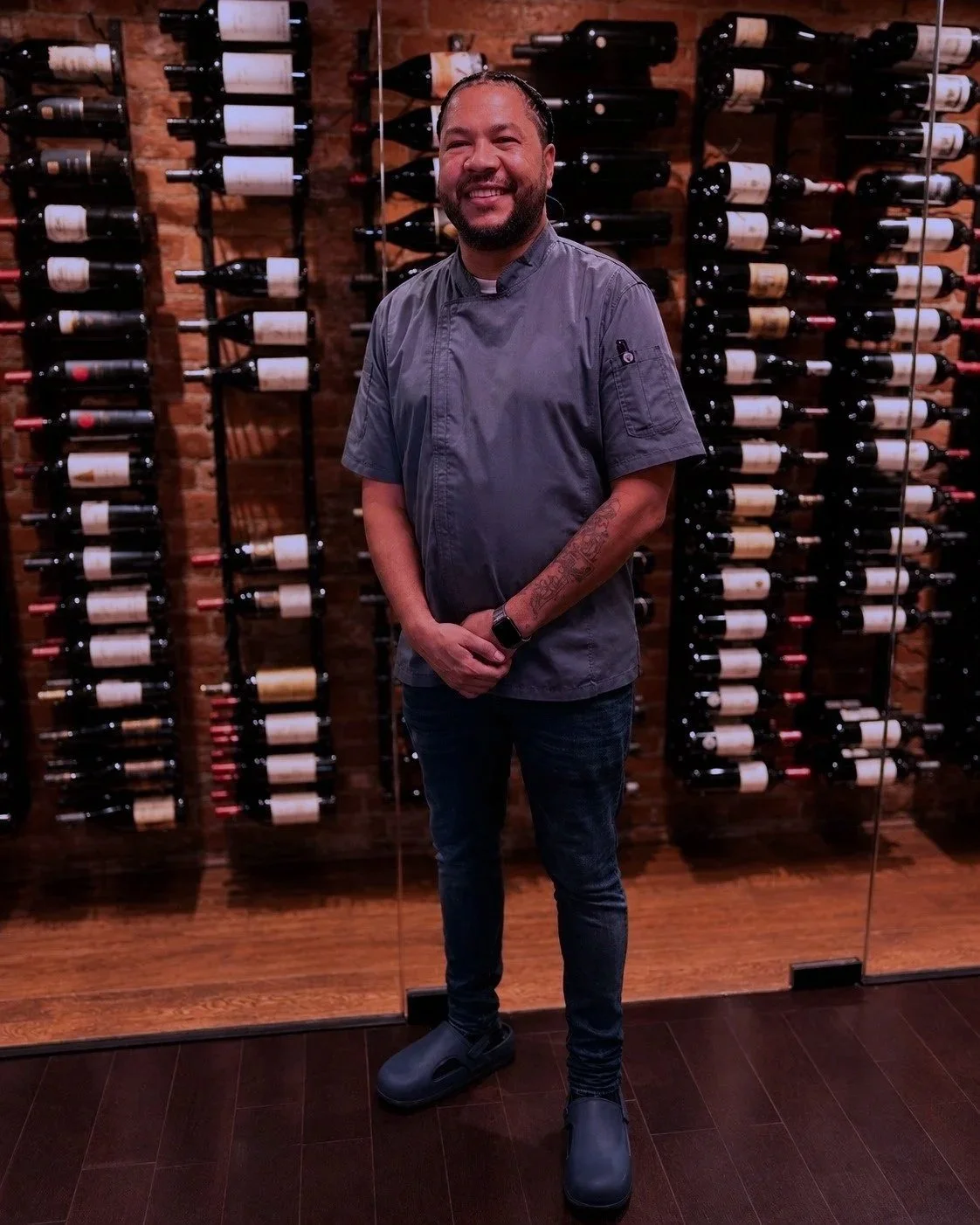
To see Alex standing inside the room he has been cooking toward.
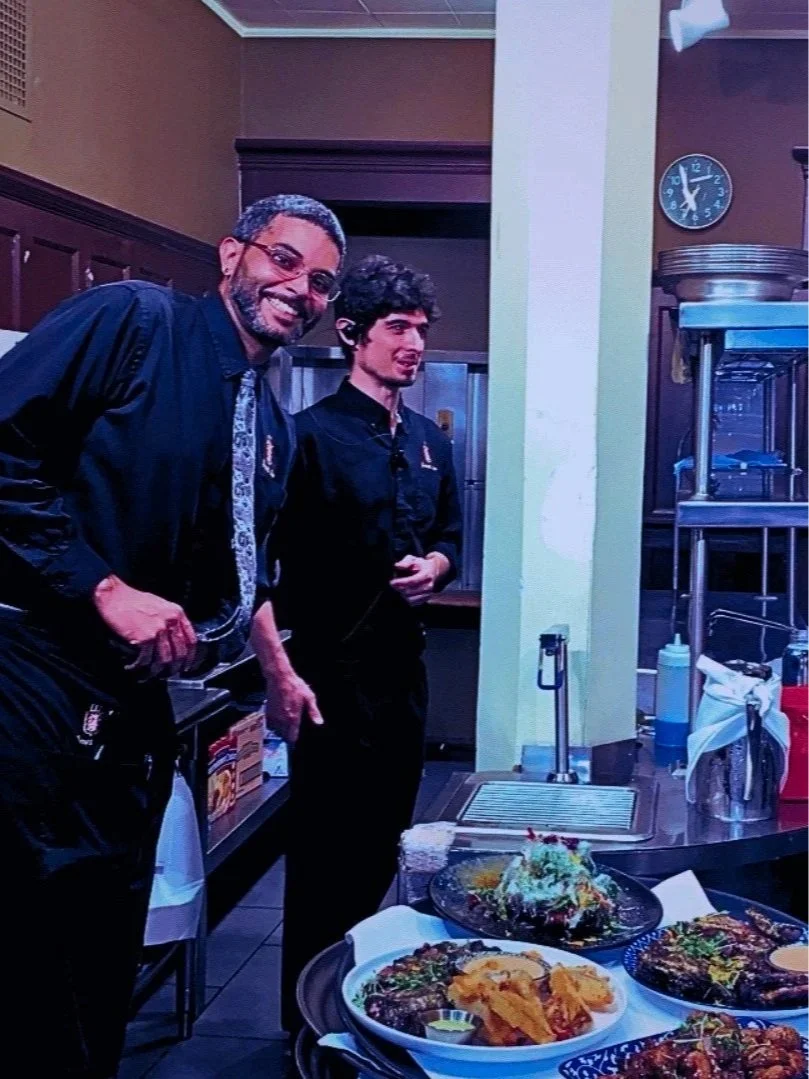
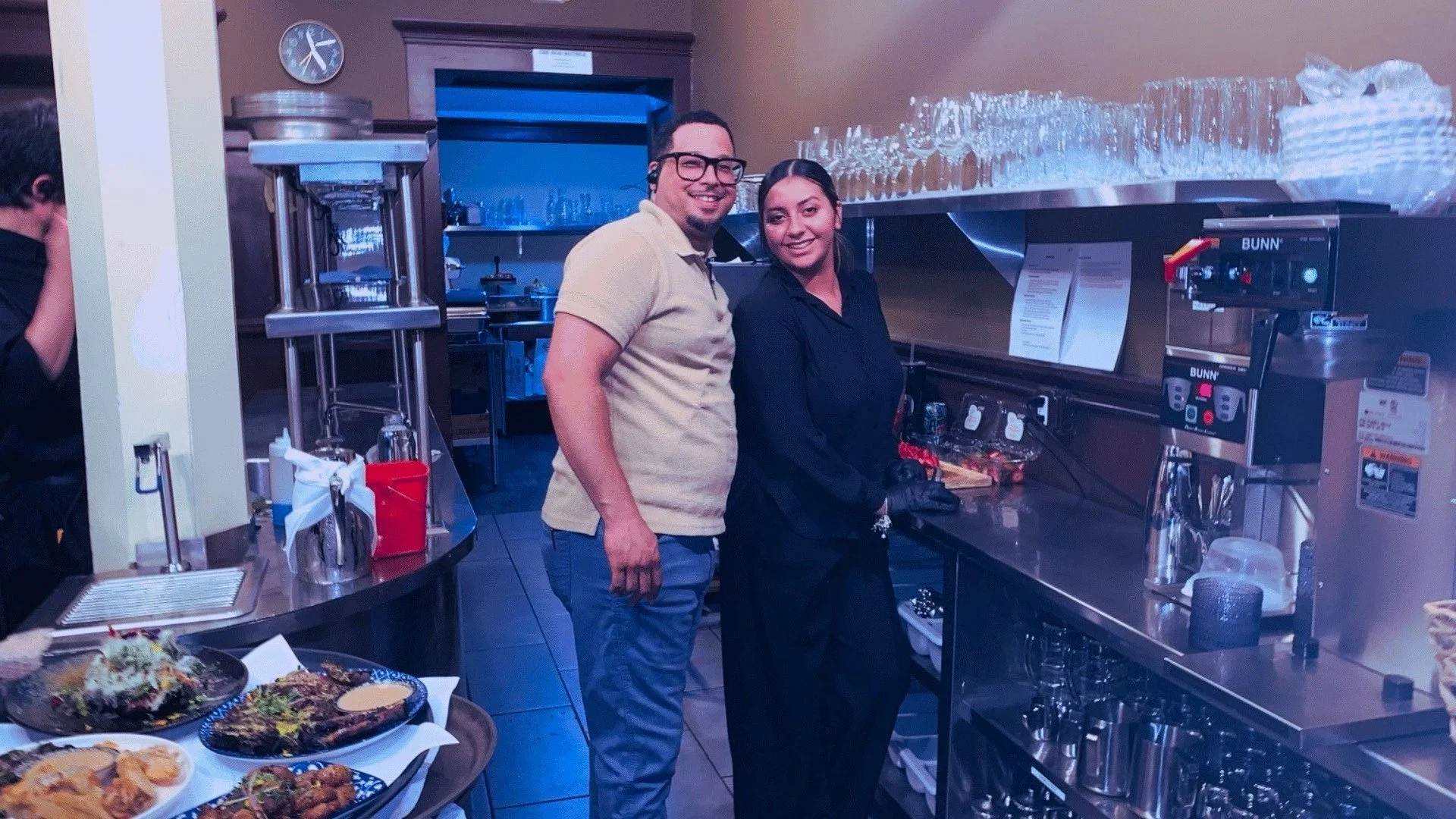
To watch the staff carry that vision from the kitchen to the table.
To experience the moment when the building, the food, and the people finally become one thing.